
It's Flood Safety Week: When to prepare and when to take action
This is an opportunity to increase awareness of and promote preparedness for flooding hazards.
This is an opportunity to increase awareness of and promote preparedness for flooding hazards.

This is an opportunity to increase awareness of and promote preparedness for flooding hazards.
Most flood fatalities occur in vehicles, and it only takes 12 inches of water to sweep a car away.
Decisions like turning around and not driving through a flooded roadway can make a big impact on whether you keep your car, or even your life.
Flood Safety Week is an opportunity to increase awareness of and promote preparedness for flooding hazards.
Flash flooding is one of the most dangerous types of flooding because it happens in a flash.
This flooding occurs when a slow moving storm or multiple thunderstorms occur over the same area creating a rapid rise in water along a stream or in low-lying areas which can then spill over onto roadways.
If you encounter a flooded roadway, do not attempt to drive through it.
You may misjudge the depth of the water and accidently drive into a low lying area under a bridge and overpass and quickly submerge your vehicle.
If that flooded street lies along a creek, stream or river you may end up being carried away by the fast moving water.
It's important to know when to prepare for a flood and when to take action.
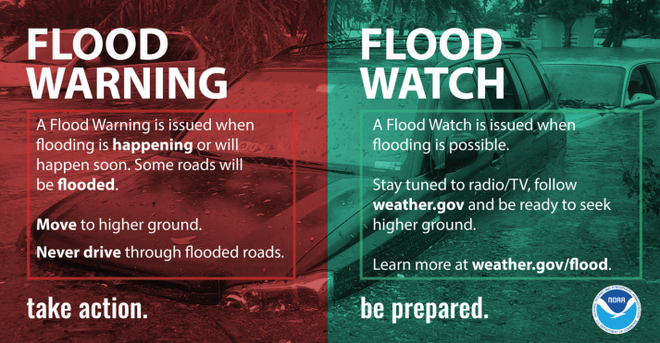
When a Flood Watch is in effect, it means flooding is possible in your area.
When a Warning occurs, it means flooding is imminent or already occurring.
The National Weather Service has a list of ways to stay safe before, during and after a flood.
Before a Flood
- Make a plan for your household, including your pets, so that you and your family know what to do, where to go, and what you will need to protect yourselves from flooding.
- Learn and practice evacuation routes, shelter plans, and flash flood response.
- Gather supplies, including non-perishable foods, cleaning supplies, and water for several days, in case you must leave immediately or if services are cut off in your area.
During a Flood
- Find safe shelter right away.
- Do not walk, swim or drive through flood waters.
- Stay off bridges over fast-moving water.
- Stay inside your car if it is trapped in rapidly moving water. Get on the roof if water is rising inside the car.
- Get to the highest level if trapped in a building. Only get on the roof if necessary and once there signal for help. Do not climb into a closed attic to avoid getting trapped by rising floodwater.
After a Flood
- Return home only when authorities say it is safe.
- Avoid driving except in emergencies.
- Wear heavy work gloves, protective clothing and boots during clean up.
- Be aware that snakes and other animals may be in your house.
- Turn off the electricity to prevent electric shock if it is safe to do so. Do not touch electrical equipment if it is wet or if you are standing in water.
- Avoid wading in floodwater, which can be contaminated and contain dangerous debris.
- Use a generator or other gasoline-powered machinery ONLY outdoors and away from windows.